

rotating residential
kawojit599@asimarif.com
Reimagining Living Spaces: The Rise of Rotating Residential Architecture (292 อ่าน)
9 ส.ค. 2568 21:13
In the constantly evolving world of architecture and real estate, a fresh concept has emerged that challenges the way we think about homes —rotating residential design. More than just an architectural novelty, this innovation combines mechanical engineering, energy efficiency, and modern lifestyle trends to create living spaces that adapt to their occupants’ needs in ways traditional homes cannot. Let’s explore how rotating residential buildings are transforming both urban and rural landscapes.
What Does “Rotating Residential” Mean?
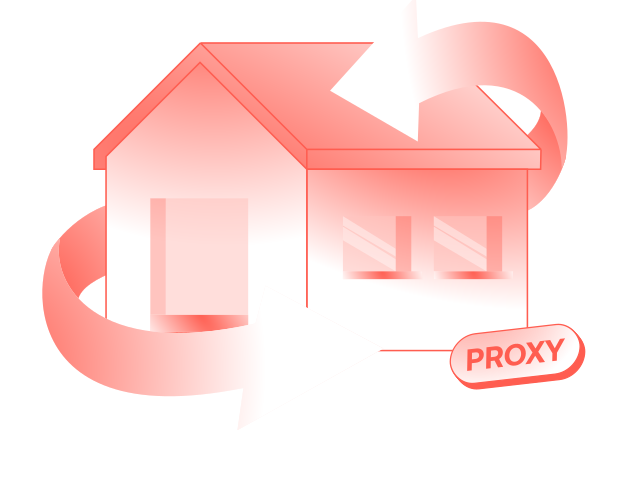
A rotating residential building is a structure — typically a home or apartment complex — that can physically rotate on its axis, either partially or fully. This movement may be powered by motors, hydraulic systems, or other mechanical mechanisms. The purpose of rotation can range from optimizing sunlight exposure and natural ventilation to providing different views throughout the day.
Some designs rotate slowly over 24 hours, while others allow residents to control the direction and speed, essentially giving them a customizable view at the push of a button. Imagine waking up to face the sunrise and later having your living room turn toward a mountain range or city skyline — without ever leaving your sofa.
A Brief History of Rotating Architecture
The concept of rotating buildings isn’t entirely new. In the mid-20th century, architects experimented with revolving restaurants at the tops of skyscrapers, driven by large turntables. The residential application, however, is far more recent. Early prototypes appeared in the early 2000s, when architects began integrating rotating platforms into luxury homes, often as experimental showcases.
The real turning point came when advancements in materials, automation, and renewable energy made rotating residential construction both feasible and sustainable for a wider audience.
Why Rotating Residential Designs Are Gaining Popularity
1. Maximizing Natural Light
One of the main appeals is the ability to capture optimal sunlight. In colder climates, a home can be oriented toward the sun for warmth, while in hotter climates, the rotation can help reduce heat gain by avoiding direct exposure during the hottest parts of the day.
2. Enhanced Views
Static homes are limited to the scenery outside their fixed windows. A rotating residential unit can change its orientation to highlight different landscapes, cityscapes, or waterfronts, offering a dynamic living experience.
3. Energy Efficiency
Rotating homes can be integrated with solar panels that track the sun, increasing energy capture. The flexibility also supports passive heating and cooling strategies, reducing reliance on artificial climate control.
4. Lifestyle Customization
Whether you want your bedroom facing the ocean in the morning or your home office looking out over a tranquil garden in the afternoon, rotation gives you control over your environment like never before.
Engineering Behind a Rotating Residential Home
The structural and mechanical engineering of a rotating residential home is sophisticated yet surprisingly practical. Most are built on a central pivot or turntable, supported by a ring of wheels or bearings that distribute the building’s weight evenly. The rotation mechanism is typically powered by electric motors, sometimes coupled with hydraulic assistance for smooth movement.
Some advanced designs feature smart control systems that automatically adjust rotation based on weather conditions, time of day, or user preferences programmed into a mobile app. Safety features, such as locking mechanisms, ensure stability during high winds or seismic activity.
Challenges in Rotating Residential Construction
While rotating homes are undeniably appealing, they do come with unique challenges:
Cost: The complexity of the rotation mechanism and specialized foundation often increases construction costs compared to traditional homes.
Maintenance: Mechanical systems require regular upkeep to ensure smooth and safe operation.
Space Requirements: Adequate clearance is necessary to avoid obstacles during rotation, which can limit placement in dense urban environments.
Regulatory Hurdles: Building codes and zoning laws may not always account for rotating structures, requiring additional planning and approvals.
Despite these obstacles, continued innovation and growing interest are making the concept increasingly accessible.
Famous Examples of Rotating Residential Designs
The Everingham Rotating House – Australia
Perhaps one of the most famous, this circular home in New South Wales can make a full rotation in just 30 minutes. Its design allows the owners to follow the sun or shade depending on the season.
Dynamic Tower – Dubai
Although primarily a high-rise concept, the Dynamic Tower’s design features individual floors capable of rotating independently, creating a constantly changing façade.
Villa Girasole – Italy
Dating back to the 1930s, this pioneering structure in Verona rotates on a massive circular track to follow the sun — a testament to the long-standing fascination with rotational architecture.
Rotating Residential Meets Sustainability
Sustainability is a major driving force in modern architecture, and rotating homes align perfectly with green building principles. By optimizing orientation, these structures can drastically reduce energy use for lighting, heating, and cooling. When combined with solar panels, rainwater harvesting, and eco-friendly materials, rotating residential properties can become near-self-sustaining.
For example, solar arrays mounted on a rotating roof can maintain perfect alignment with the sun throughout the day, maximizing electricity generation. Similarly, strategically rotating away from strong winds or intense midday sun can lower HVAC demands.
Urban Potential for Rotating Residential Buildings
In densely populated cities, space is at a premium, and views are often blocked by surrounding structures. Rotating residential towers could solve both issues. By allowing each unit to pivot independently, every resident could enjoy access to sunlight and panoramic vistas at different times.
Urban planners are also exploring rotating residential buildings as a way to reduce “view wars” — disputes between neighbors over blocked scenery — by ensuring fair access to desirable sightlines.
The Psychology of a Changing View
Beyond the technical and environmental benefits, rotating homes can also impact residents’ mental well-being. Research in environmental psychology suggests that varied visual stimuli — like changing views — can enhance mood, reduce stress, and increase creativity.
For people who work from home, a rotating residential space can break up monotony without physically leaving the house. This novelty factor can even enhance property value, making such homes highly sought after in competitive real estate markets.
Future Trends in Rotating Residential Living
The next decade is likely to see rotating residential designs becoming more mainstream, aided by:
Modular Construction: Prefabricated rotating bases could reduce construction time and cost.
AI-Assisted Rotation: Intelligent systems could automatically adjust the building’s position for optimal comfort and energy use.
Mixed-Use Developments: Combining residential, commercial, and recreational spaces in rotating complexes could redefine community living.
As technology advances, we might even see fully self-sustaining rotating residential villages powered entirely by renewable energy.
Final Thoughts: The Turning Point for Housing
Rotating residential architecture is no longer a far-fetched sci-fi idea — it’s a practical, eco-friendly, and luxurious living solution. While cost and technical challenges remain, the benefits of customizable views, energy efficiency, and sustainable design are too compelling to ignore.
The movement — quite literally — is still in its early stages, but as more architects and homeowners embrace the possibilities, rotating homes could become a symbol of the next evolution in residential living. The future of housing might just be one that turns to meet the needs of its residents — and the sun.
175.107.247.113
rotating residential
ผู้เยี่ยมชม
kawojit599@asimarif.com