

dfirpere
dfiguuur@outlook.com
3d figures (42 อ่าน)
30 ก.ย. 2569 19:22
**Understanding 3D Figures: A Comprehensive Guide to Three-Dimensional Shapes**
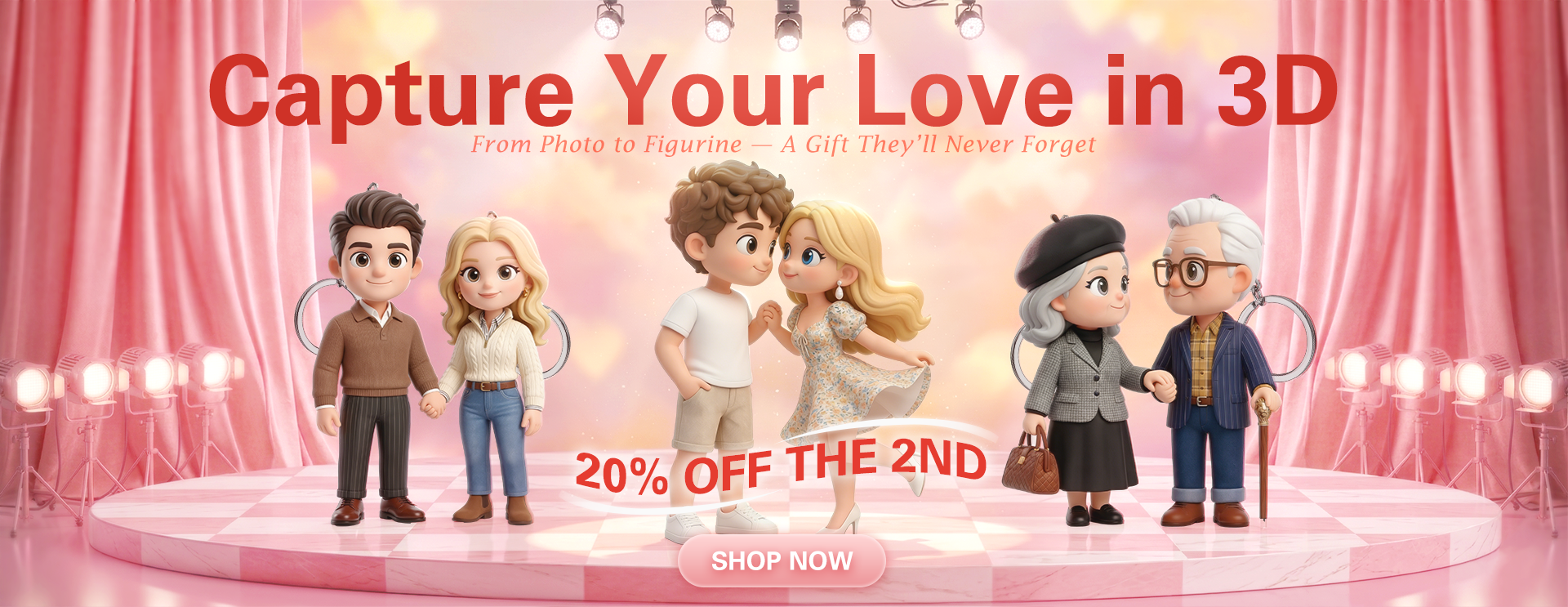
Three-dimensional (3d figures) figures are an essential part of geometry and play a significant role in various fields, including mathematics, engineering, and art. 3D figures, unlike two-dimensional shapes, have depth, width, and height, allowing them to occupy space and create more complex visual representations. This article will delve into the different types of 3D figures, their properties, and real-world applications.
### What are 3D Figures?https://www.my3dfigure.co.uk/collections/3d-display-ornament
3D figures, or three-dimensional shapes, consist of surfaces, or faces, that form a bounded volume. These shapes can be classified into two main categories: polyhedra and non-polyhedra.
1. **Polyhedra**: These are solid shapes with flat polygonal faces. Common examples include:
- **Cubes**: Six equal square faces; all angles are right angles.
- **Rectangular Prisms**: Opposite faces are equal rectangles.
- **Tetrahedra**: Four triangular faces; the simplest form of a polyhedron.
- **Pyramids**: A base that is a polygon and triangular faces that meet at a point (the apex).
- **Cylinders**: Two parallel circular bases connected by a curved surface.
- **Spheres**: A perfectly round 3D shape where every point on the surface is equidistant from the center.
2. **Non-Polyhedra**: These shapes do not have flat faces. Examples include:
- **Cylinders**: With two circular bases and a curved surface.
- **Cones**: With a circular base that tapers smoothly to a point.
### Properties of 3D Figures
Each 3D figure has unique properties that distinguish it from others. Some key properties include:
- **Volume**: This measures the amount of space inside a 3D figure. Formulas for calculating volume vary based on the shape:
- Cube: V = a³ (where a = length of a side)
- Cylinder: V = πr²h (where r = radius and h = height)
- **Surface Area**: This measures the total area of all the surfaces of a 3D figure. Surface area can also be calculated differently depending on the shape:
- Cube: SA = 6a²
- Sphere: SA = 4πr²
### Real-World Applications of 3D Figures
3D figures are not just abstract concepts; they have practical applications in everyday life:
- **Architecture**: Architects use 3D models to design buildings and other structures, allowing them to visualize dimensions and spatial relationships before construction begins.
- **Engineering**: In engineering, 3D figures are essential in product design, simulations, and prototype developments, ensuring that specifications are met.
- **Animation and Gaming**: In the entertainment industry, 3D figures are fundamental in creating virtual characters and environments in video games and animation.
- **Medical Imaging**: 3D imaging techniques such as MRI and CT scans provide crucial insights into human anatomy, aiding in diagnosis and treatment planning.
### personalized figure keychains
3d display ornament<br style="font-family: 'Microsoft YaHei'; font-size: medium;" />3d fridge magnets<br style="font-family: 'Microsoft YaHei'; font-size: medium;" />3D Custom Bag Charms<br style="font-family: 'Microsoft YaHei'; font-size: medium;" />3D Figure Decor<br style="font-family: 'Microsoft YaHei'; font-size: medium;" />Custom 3D Figure Night Light
Understanding 3D figures is crucial for anyone interested in geometry, art, science, or technology. Their diverse shapes and properties offer a wealth of knowledge that applies to a variety of disciplines. By mastering the concepts of 3D figures, you not only enhance your mathematical skills but also gain insights into their practical applications in the real world. Whether you are a student, a professional, or just someone curious about the shapes around you, grasping the fundamentals of 3D figures will be immensely beneficial.
61.221.116.28
dfirpere
ผู้เยี่ยมชม
dfiguuur@outlook.com